








Every time an ambulance leaves the station in the 98848, hundreds of thousands of dollars in equipment, training, staffing, maintenance, fuel, insurance, and preparation are rolling down the road with it.
Most people only see Fire District 3 for a few minutes on one of the worst days of their lives. What they do not see is the massive financial system working quietly in the background long before the sirens ever sound.
Grant County Fire District 3’s 2025 annual financial report gives the community a rare look into that system. And while the report itself is full of accounting terminology and technical fund categories, the bigger story is actually very human: emergency response in rural communities is getting dramatically more expensive, and Fire District 3 appears to be trying to stay ahead of those costs before they become a crisis.
TL;DR
- Fire District 3 brought in roughly $5.13 million in revenue during 2025
- The district spent just over $3 million on public safety operations
- Property taxes remain the primary funding source for local emergency response
- The district ended the year with approximately $4.66 million in cash and investments
- Reserve funds grew substantially during the year
- Grants and outside funding played a major role in equipment and operational support
- The report suggests the district is preparing for future equipment, infrastructure, and operational costs instead of simply reacting to emergencies as they happen
- Rising statewide costs for fire and EMS services continue to put pressure on rural districts like those serving the 98848

Emergency Services Are Becoming More Expensive Everywhere
One of the most important things this report reveals is not unique to Quincy or the surrounding communities. It is happening across Washington state.
The cost of emergency response has exploded over the last decade.
Ambulances are more expensive. Fire engines are dramatically more expensive. Medical equipment costs more. Insurance costs more. Fuel costs more. Facilities cost more. Recruiting and retaining qualified personnel is becoming harder for departments across rural America.
And unlike major metropolitan departments with massive tax bases, rural districts like Fire District 3 have to stretch every dollar across large geographic areas while still maintaining fast emergency response capability.
That is the backdrop behind this report.
This is not simply a story about accounting spreadsheets. It is a story about whether rural emergency services can continue keeping pace with rising demand and rising costs in communities like the 98848.
Where the Money Came From
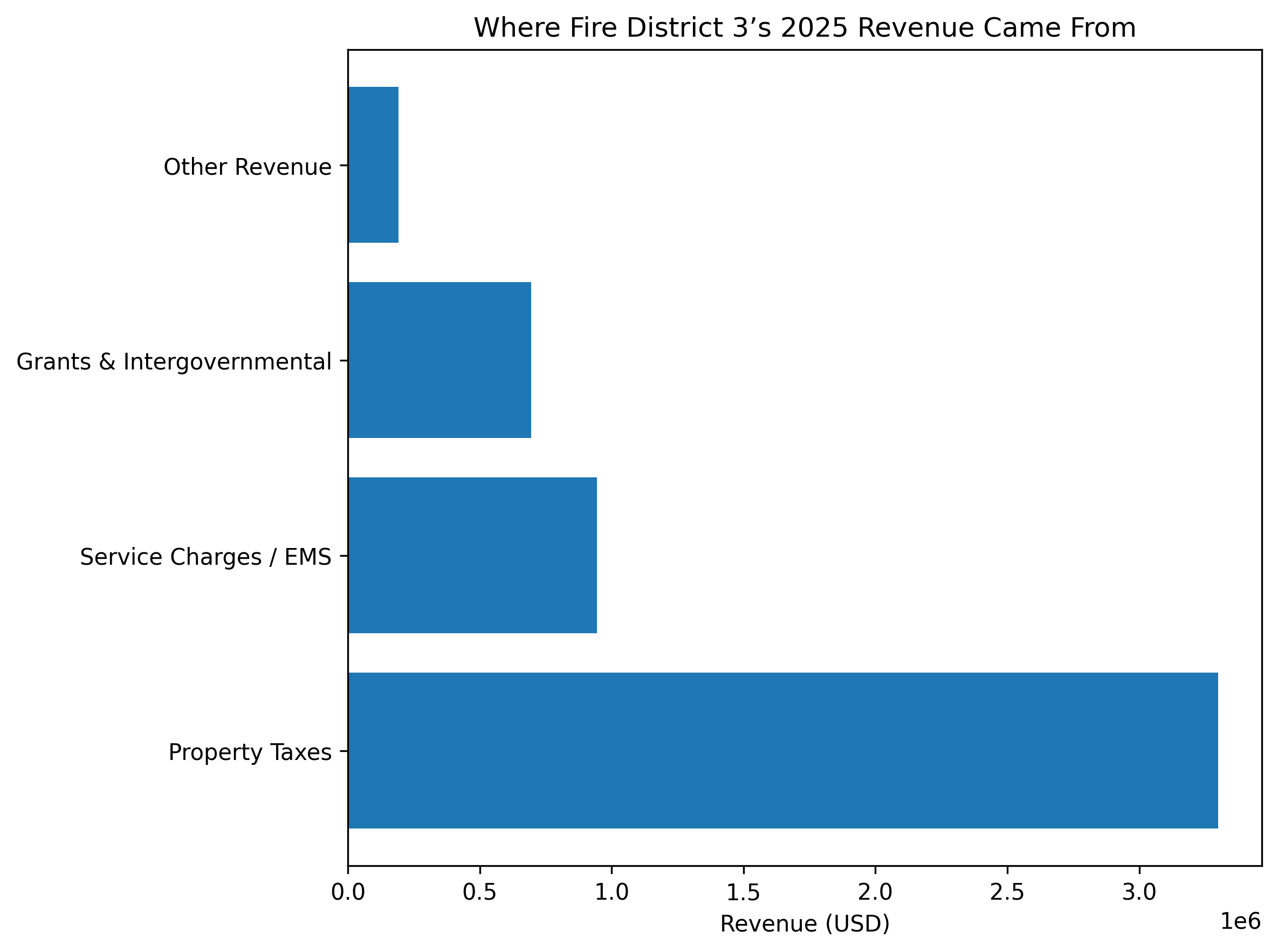
According to the report, Fire District 3 brought in approximately $5.13 million in total revenue during 2025.
The majority of that funding came from three primary sources.
Property Taxes Remain the Foundation
Property taxes generated approximately $3.3 million for the district during the year.
That remains the financial backbone of local emergency response.
For residents throughout the 98848, that means the community itself is still largely funding the fire and EMS system that responds when emergencies happen.
While grants and service billing help offset costs, the reality is simple: without taxpayer support, modern emergency response would not function at its current level.
EMS and Service Revenue Continue Growing in Importance
The district also reported approximately $944,000 through charges for services.
That category largely reflects EMS-related billing and emergency service revenue.
This has become increasingly important for fire districts statewide as emergency medical calls continue making up a larger share of overall response activity.
Many people still think of fire districts primarily as “fire response.” In reality, modern rural departments spend a tremendous amount of their time handling medical emergencies, vehicle collisions, rescues, lift assists, and other EMS-related calls.
Grants and Outside Funding Played a Major Role
One of the more interesting pieces of the report is how much outside funding supported district operations during 2025.
The district reported nearly $695,000 in intergovernmental revenue.
That included funding connected to:
- Homeland security programs
- Department of Natural Resources grants
- Department of Health support
- Local government distributions
- Fire protection and EMS-related funding
The report also references FEMA-related assistance connected to firefighter grant activity.
For the community, that matters more than people may realize.
Without outside grants and supplemental funding sources, many equipment purchases and operational costs would likely fall much more heavily on local taxpayers.
In many ways, grant funding has become one of the tools rural districts use to survive rising emergency service costs without constantly increasing tax pressure.
The True Cost of Readiness
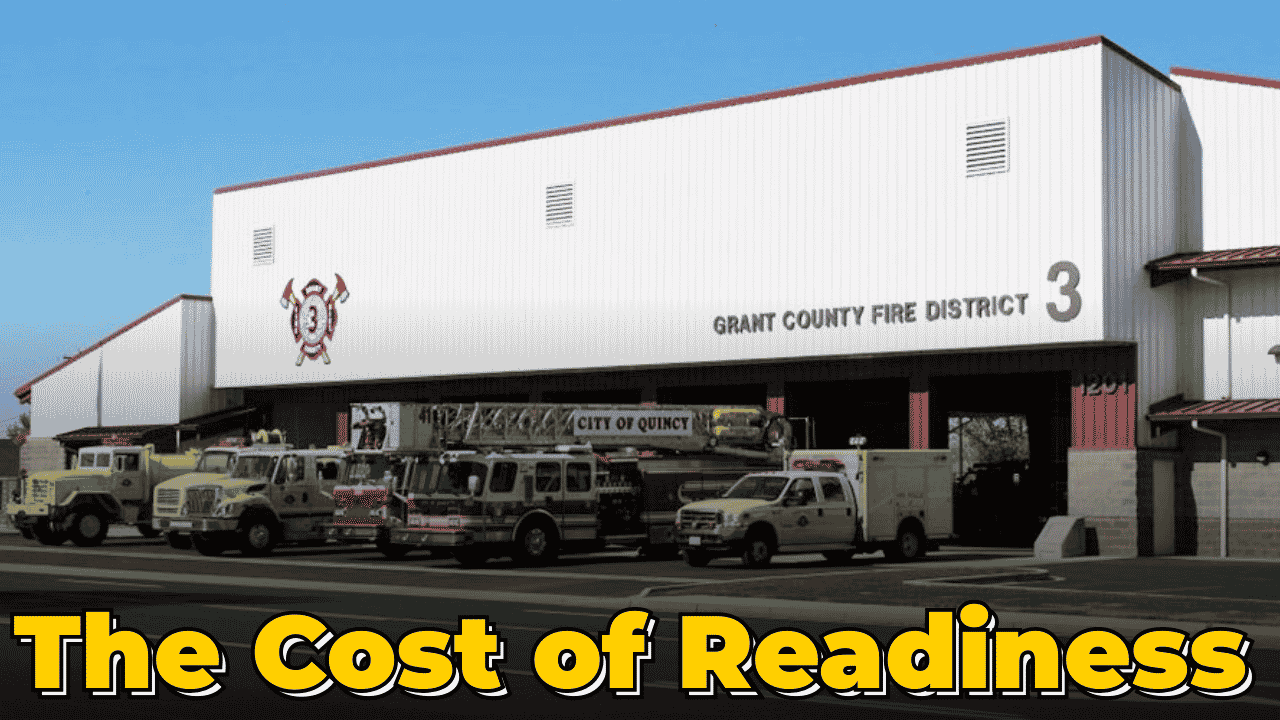
The district reported spending just over $3 million on public safety expenditures in 2025. But numbers alone do not fully explain what that means.
Emergency readiness is expensive even when nothing is actively happening.
Stations still have to remain operational. Apparatus still has to be maintained. Personnel still require training and certification. Medical supplies still need replacement. Equipment still ages. Fuel still gets burned. Radios still fail. Buildings still require upkeep.
That preparedness is what the community is truly paying for.
Most people only see the visible moments:
- The ambulance arriving
- The engine pulling up
- The firefighters entering a structure
- The rescue on the side of the highway
What they do not see is the years of planning, maintenance, inspections, staffing decisions, equipment replacement schedules, and budgeting that made that response possible in the first place.
Why the Reserve Funds Matter So Much
Perhaps the most important story inside the report is the district’s reserve growth. Fire District 3 started the year with approximately $3.6 million in cash and investments and ended 2025 with about $4.66 million.
Reserve fund balances alone finished at just over $2 million. And this is where many people misunderstand government finance. Large reserves do not automatically mean money is being hoarded or left unused.
In emergency services, reserves often represent survival planning.
A modern fire engine can cost close to or above $1 million depending on configuration. Ambulances can easily exceed a quarter-million dollars. Specialized rescue tools, breathing apparatus, radios, turnout gear, cardiac monitors, and communication systems all come with enormous costs.
Even basic facility upgrades or major maintenance projects can consume hundreds of thousands of dollars almost overnight. For a rural district, reserve funds are often the difference between planned replacement and financial crisis.
The report suggests Fire District 3 is trying to build long-term financial stability rather than simply spending everything available each year.
Equipment, Infrastructure, and Future Planning
The report also shows significant capital expenditures and fund transfers associated with equipment and long-term planning. Money was moved into reserve and construction-related funds during the year, signaling the district is likely preparing for future infrastructure or apparatus needs.
That matters because emergency infrastructure cannot usually be replaced quickly or cheaply.
Fire stations, ambulances, engines, communication systems, and rescue equipment often require multi-year planning cycles. Waiting until equipment fails before preparing financially can leave communities vulnerable.
For growing communities throughout the 98848, that kind of planning may become increasingly important as demand on emergency services continues evolving.
The Financial Picture Appears Stable, But Pressure Is Still Coming
Overall, the district’s financial position appears relatively stable based on the report.
Revenues exceeded expenditures overall. Ending balances remain strong. Reserve funds increased. The district also appears to be strategically positioning money instead of aggressively spending every available dollar.
But none of that means future pressure is disappearing.
The reality is that inflation continues driving up nearly every aspect of emergency response statewide:
- Vehicles
- Equipment
- Construction
- Insurance
- Fuel
- Medical supplies
- Staffing
- Training
At the same time, rural communities continue growing and emergency demand rarely trends downward long-term.
The challenge for districts like Fire District 3 is not just maintaining today’s service levels. It is preparing for what emergency response will cost five or ten years from now.
What the 2025 Trends Could Mean for 2026
While no financial report can perfectly predict the future, the trends inside Fire District 3’s 2025 report offer several strong clues about what the community may see in 2026 and beyond.
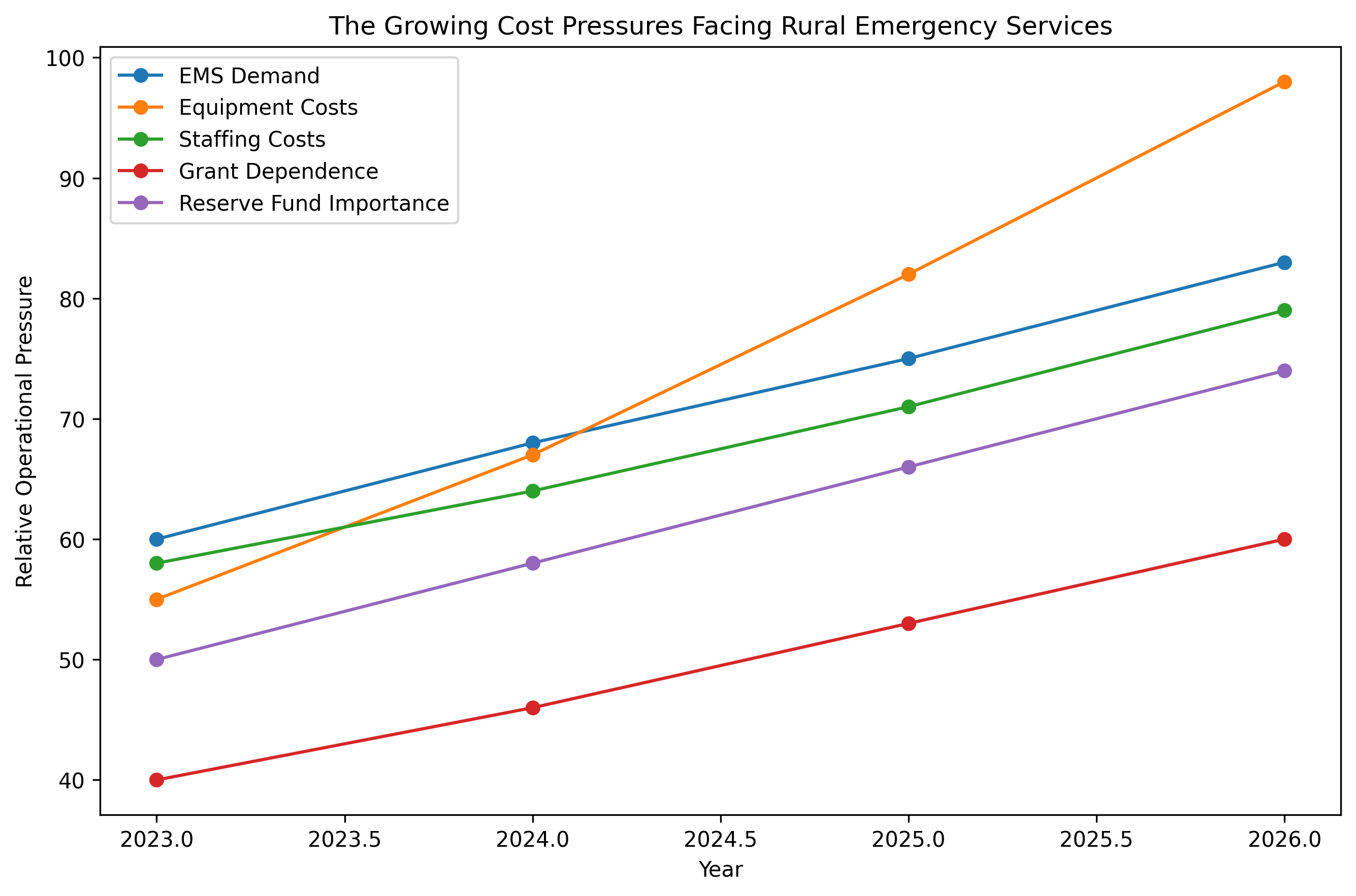
Reserve Building Will Likely Continue
One of the clearest patterns in the report is the district’s focus on strengthening reserves and positioning money for future needs.
That likely means Fire District 3 leadership expects major future expenses on the horizon.
Those could include:
- Apparatus replacement
- Facility upgrades
- Equipment modernization
- Communication infrastructure
- Increased maintenance costs
- Future capital projects
Based on the 2025 trends, it would not be surprising to see the district continue prioritizing financial stability and reserve growth through 2026 rather than dramatically expanding spending.
Grant Funding Will Become Even More Important
The report shows outside funding and grants already play a meaningful role in district operations.
That trend will likely continue.
Across Washington state, rural emergency districts are increasingly relying on:
- Federal grant opportunities
- State emergency preparedness funding
- EMS support programs
- Wildfire preparedness grants
- Equipment assistance programs
As equipment prices continue rising, districts that aggressively pursue outside funding may be in a much stronger position long term than those relying solely on local tax revenue.
In many ways, grant-writing and funding management are becoming just as important to rural emergency sustainability as firefighting itself.
EMS Demand Will Probably Keep Rising
Another likely trend heading into 2026 is continued pressure from EMS-related calls.
Across rural America, emergency medical response now makes up a growing percentage of total fire district activity. The 2025 report already reflects how important EMS billing and service revenue have become to district finances.
For the 98848, continued community growth could mean:
- Higher ambulance demand
- More medical transport calls
- Increased staffing pressure
- Greater equipment wear
- Rising operational costs
And unlike some other services, emergency response capacity cannot simply “wait until later” when demand increases.

Equipment Replacement Costs May Become a Bigger Public Conversation
One of the biggest financial realities likely approaching rural districts statewide is apparatus replacement.
The cost of fire engines, ambulances, rescue equipment, and communication systems has increased dramatically over the last several years. Industry-wide supply chain issues and inflation have only accelerated that trend.
Based on the district’s reserve activity and financial positioning in 2025, the community may hear more conversations in 2026 about:
- Long-term replacement planning
- Fleet modernization
- Infrastructure investment
- Capital project priorities
- Future funding strategies
Those discussions are becoming increasingly common across Washington as departments face equipment lifecycles that no longer match older budgeting assumptions.
Financial Stability Does Not Mean Financial Pressure Is Gone
Perhaps the biggest prediction from the 2025 report is this: even financially stable districts are still under growing pressure.
Fire District 3 appears to be in a stronger position than many people might assume based on its reserve growth and ending balances. But the broader trends affecting emergency services are still moving upward:
- Inflation
- Staffing costs
- Vehicle costs
- Medical supply costs
- Insurance costs
- Training requirements
- Emergency call complexity
That means 2026 will likely continue being a balancing act between maintaining strong emergency readiness today while preparing financially for even larger costs tomorrow.
And for communities throughout the 98848, that balancing act may become one of the defining challenges facing rural emergency services over the next decade.
Questions the Community Should Watch Going Forward
This report also raises several important long-term questions for the community:
- Will reserve growth keep pace with future apparatus replacement costs?
- How dependent will the district become on outside grant funding?
- Are future station upgrades or expansion projects already being anticipated?
- How sustainable are EMS-related revenue streams long term?
- What happens if emergency call volume continues increasing faster than funding?
These are not warning signs. They are simply the realities rural emergency districts across Washington are now navigating.
And they are conversations communities throughout the 98848 will likely hear more about in the years ahead.
What This Means to You
For residents across Quincy, George, Crescent Bar, Sunland Estates, Winchester, and the surrounding 98848 communities, this report offers a reminder that emergency response is far more complex than most people ever see.
The district is not just paying for sirens and trucks.
It is paying for readiness.
For staffing.
For training.
For maintenance.
For future replacement.
For emergency capability that has to function immediately at any hour, under almost any conditions.
The financial report suggests Fire District 3 is trying to prepare for the future before future costs become emergencies themselves.
And in a rural community where emergency response times, wildfire preparedness, medical transport capability, and infrastructure reliability all matter deeply, that preparation may ultimately be one of the most important investments the community makes.
Beyond the Numbers
At first glance, a financial report can look dry and disconnected from everyday life.
But buried inside this report is the story of what it actually takes to protect a rural community in 2025.
Behind every emergency response in the 98848 is an invisible network of planning, equipment, staffing, grants, reserve funds, maintenance schedules, and financial decisions made years before the call ever comes in.
Most people never see that side of Fire District 3.
This report gives the community a glimpse of it.
And what it shows is a district trying to prepare not only for today’s emergencies, but for the growing financial realities of tomorrow as well.